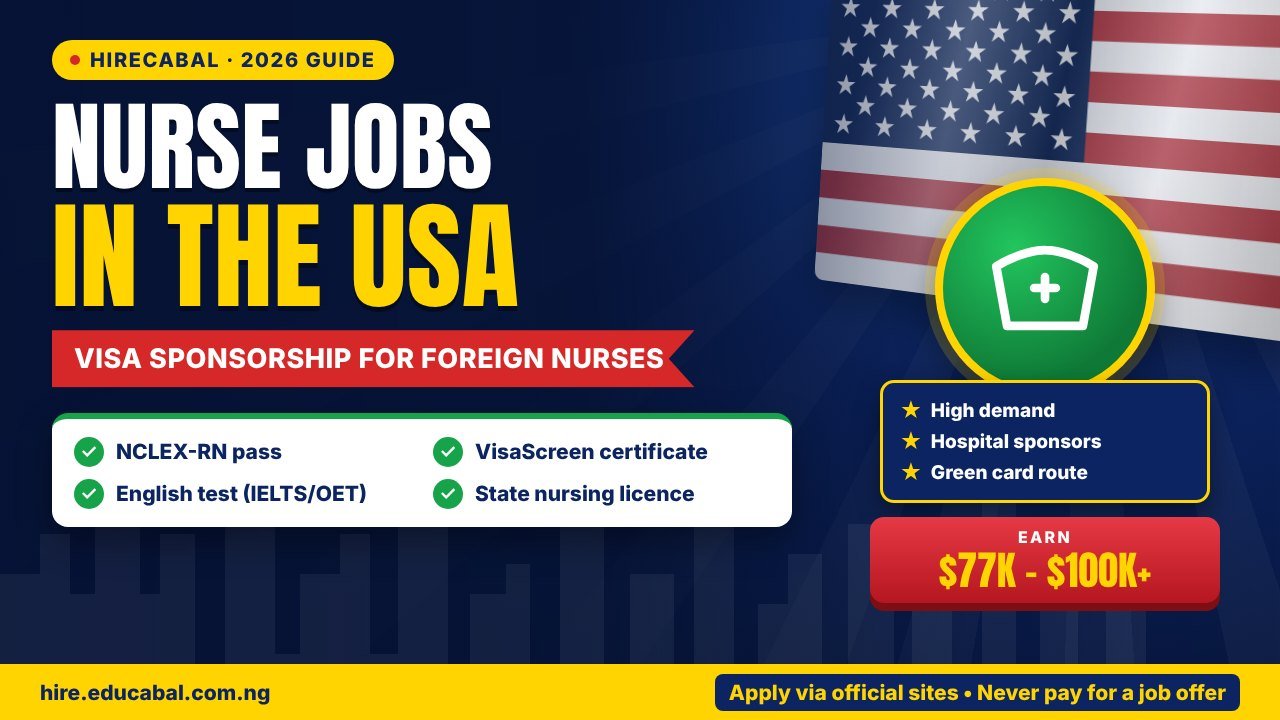
The United States has a long-running shortage of registered nurses (RNs), and many hospital systems recruit internationally educated nurses every year. The process is slow and paperwork-heavy, but it is one of the most established routes to a US job and, eventually, permanent residence.
What US nurses earn
Pay depends heavily on the state and the shift pattern. Many full-time hospital RNs earn roughly $77,000 to $100,000 a year, and pay is higher in states such as California, New York, Washington and Massachusetts. Night, weekend and specialty units (ICU, emergency, operating theatre) usually pay more.
Read also: H-2A Farm Jobs in the USA: Pay, Housing and How Agricultural Workers Are Hired
Requirements for foreign-educated nurses
- Nursing degree or diploma and an active licence in your home country.
- NCLEX-RN: the US licensing exam. It can be taken at Pearson VUE test centres in many countries.
- Credentials evaluation through a body such as CGFNS, which also issues the VisaScreen certificate required for US work visas.
- English test: usually IELTS Academic or OET at the level set for VisaScreen.
- State licence: each state board of nursing sets its own rules, so the hospital usually tells you which state to apply to.
Which visa routes are used
EB-3 (green card). This is the most common route. The hospital or a nurse staffing agency files for permanent residence on your behalf. Registered nursing is a “Schedule A” occupation, so employers can skip part of the usual labour-market test. The downside is waiting time: EB-3 depends on the monthly State Department Visa Bulletin, and queues can run for years.
H-1B. Only possible for nursing roles that genuinely require a bachelor’s degree, such as some specialist or management posts. Most general RN jobs do not qualify.
Note for Nigerian applicants: since 1 January 2026, a US presidential proclamation has suspended most immigrant visas (green cards processed at an embassy) and B, F, M and J visas for Nigerian nationals who were outside the US without a valid visa on that date, with limited exceptions. Temporary work visas such as H-1B are not on the suspended list, but consulates may issue them with shorter validity. Check the latest guidance from the US Embassy in Nigeria before you pay for anything.
How to apply
- Pass the NCLEX-RN and start your CGFNS credentials review.
- Prepare a US-style CV that lists your clinical units, bed numbers and procedures.
- Apply directly on the careers pages of large hospital systems, or through established international nurse recruiters that are paid by the hospital, not by you.
- Read the contract carefully. Many contracts require you to stay 2–3 years, with a repayment clause if you leave early.
Red flags
Real US employers pay the immigration costs for EB-3 nurses. Be wary of any agent who asks you for large “processing” or “placement” fees, guarantees a visa, or cannot name the hospital you will work for.


Frequently asked questions
How long does the US nurse process take?
From starting NCLEX preparation to arriving in the US, many nurses take 2–4 years. Most of that time is the EB-3 green card queue, which depends on the monthly Visa Bulletin.
Can I work as a nurse in the US without passing the NCLEX?
No. Every state requires the NCLEX-RN for a registered nurse licence, and you need a licence before you can practise.
Do I need a BSc to qualify?
A diploma can be accepted for licensing in some states, but hospitals increasingly prefer a BSN. A degree also gives you more visa options.
Information checked in October 2026. Immigration rules change often, so always confirm the latest requirements on the official government website before applying or paying any fees.