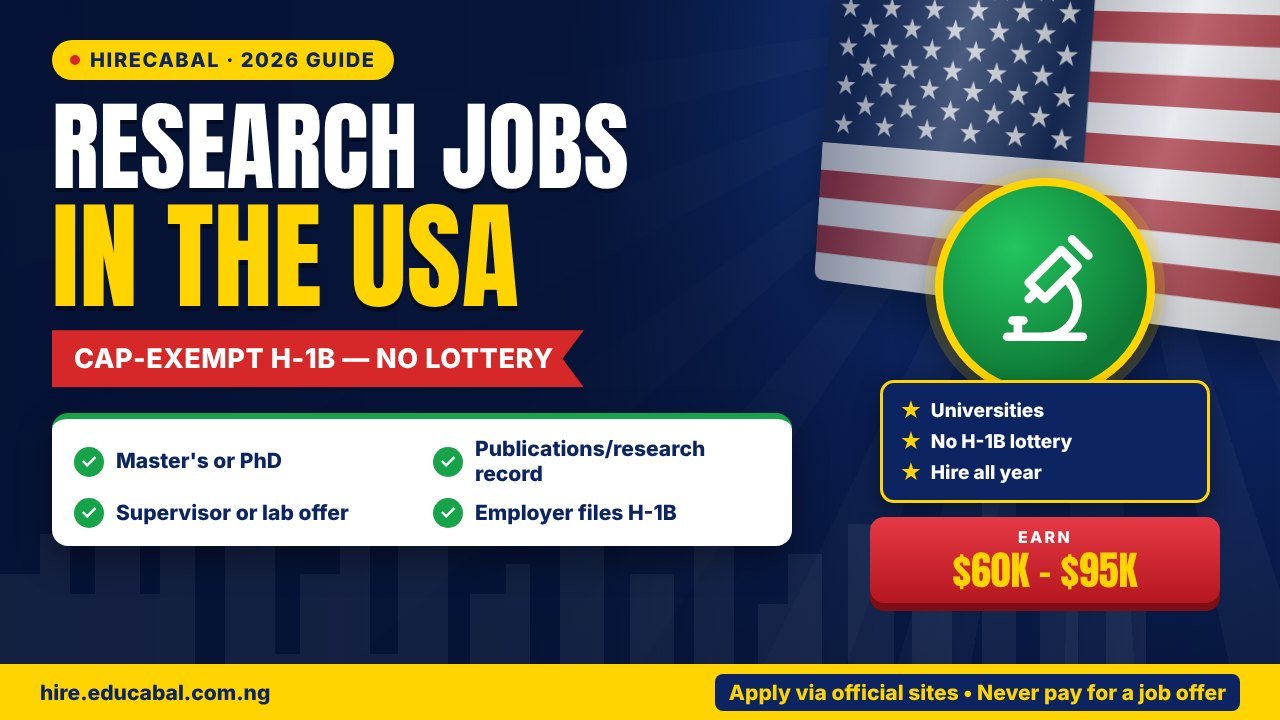
Most H-1B visas are allocated by lottery, but some employers are cap-exempt. That means they can file H-1B petitions at any time of year, with no lottery. For researchers this is one of the most reliable routes into the US job market.
Who is cap-exempt?
- Institutions of higher education (universities and colleges).
- Non-profit organisations affiliated with a university, such as many teaching hospitals and research foundations.
- Non-profit research organisations and government research organisations.
Typical roles and pay
- Postdoctoral researcher: often about $60,000–$75,000, guided by funding-agency benchmarks.
- Research scientist / staff scientist: commonly $70,000–$95,000+.
- Lab manager, data analyst, research engineer: varies by field and city.
How to get hired
- Email professors directly. Many postdocs are hired by individual principal investigators. Send a short, specific email about their recent papers and attach your CV.
- Watch university job boards and discipline-specific boards (for example, Nature Careers or Science Careers).
- Bring your own funding if you can. International fellowships make you far more attractive.
- Once you have an offer, the university’s international office files the H-1B (or sometimes a J-1 scholar visa).
Good to know
If you later move to a private company, that employer becomes subject to the cap and normally has to enter the lottery. Many researchers use the stability of a university job to apply for a green card, for example through EB-1 or EB-2 NIW.
Read also: H-2B Seasonal Jobs in the USA: Landscaping, Hotels and Seafood Work Explained
Note for Nigerian applicants: since 1 January 2026, a US presidential proclamation has suspended most immigrant visas (green cards processed at an embassy) and B, F, M and J visas for Nigerian nationals who were outside the US without a valid visa on that date, with limited exceptions. Temporary work visas such as H-1B are not on the suspended list, but consulates may issue them with shorter validity. Check the latest guidance from the US Embassy in Nigeria before you pay for anything.
Frequently asked questions
Is a PhD required?
For postdoc roles, yes. Lab manager, research assistant and data roles may only need a bachelor's or master's degree.
J-1 or H-1B: which is better?
H-1B is usually more flexible for a later green card. Some J-1 scholars face a two-year home residency requirement. Note that J visas are currently suspended for Nigerian applicants.
Do universities pay the visa costs?
Usually yes. H-1B filing fees are an employer cost by law.
Information checked in October 2026. Immigration rules change often, so always confirm the latest requirements on the official government website before applying or paying any fees.