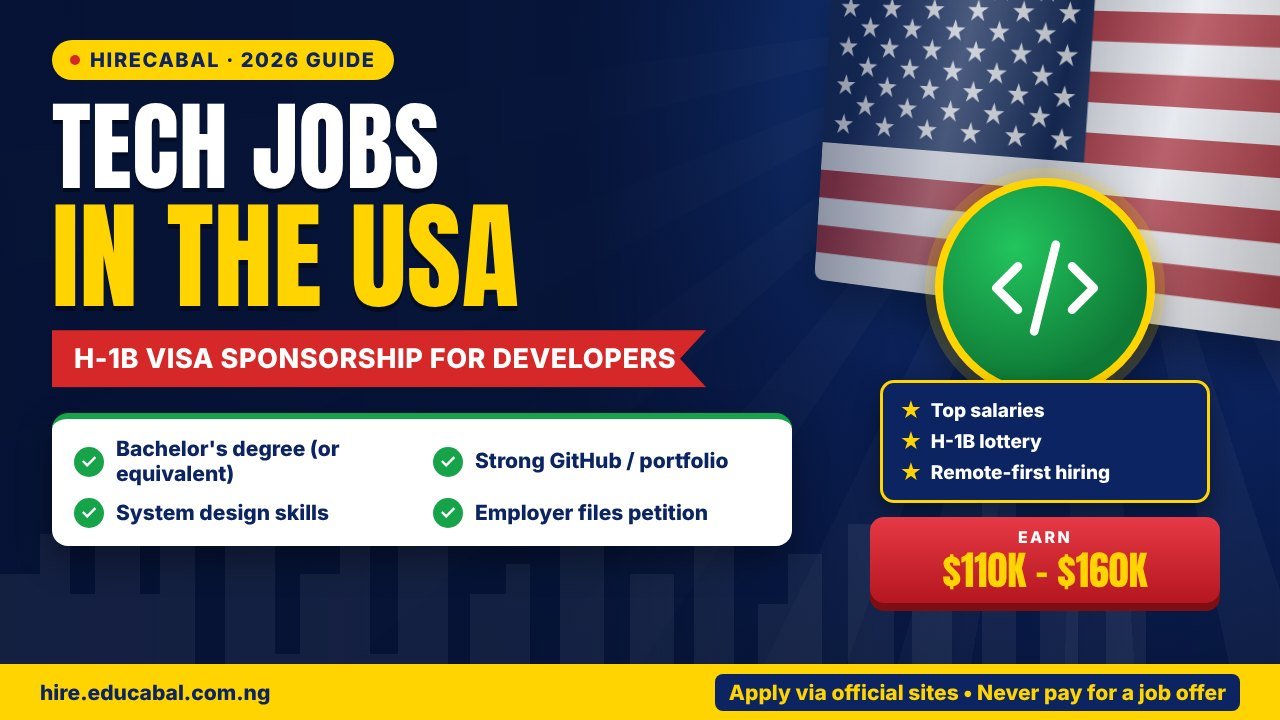
Software engineering is the field where US employers file the most H-1B petitions. But getting sponsored from outside the US is harder than it looks on social media. This guide explains how the system works so you can plan realistically.
Typical pay
US software engineers commonly earn $110,000 to $160,000 in base salary, more at large tech companies and in high-cost cities. Employers must pay at least the prevailing wage for the role and location, which is set by the Department of Labor.
Read also: H-2A Farm Jobs in the USA: Pay, Housing and How Agricultural Workers Are Hired
How H-1B works
- It needs a degree-level job. You need a bachelor’s degree in a related field, or an equivalent combination of education and experience.
- It is a lottery for most employers. Employers register candidates each March. USCIS then selects at random from the registrations, and only selected candidates can be filed for, with work starting from 1 October.
- Some employers are cap-exempt. Universities, university-affiliated hospitals and non-profit research organisations can hire H-1B workers all year without the lottery.
- Fees are in flux. A $100,000 fee on new H-1B petitions announced in 2025 was struck down by a federal court in June 2026, and the government’s appeal is ongoing. Ask employers how they are handling it.
How to improve your chances
- Target companies with a track record of sponsorship. Public Labor Condition Application (LCA) data shows which employers file H-1Bs and at what salaries.
- Consider cap-exempt employers, such as university IT departments, research labs and academic medical centres.
- Build a public portfolio and contribute to open source. US recruiters often screen on GitHub and LeetCode-style interviews.
- Look at multinationals with offices in your country. Moving later via an L-1 intracompany transfer is a common path.
Watch out for
Employers must pay most H-1B costs. Anyone selling “guaranteed H-1B slots” or asking you to pay for your own petition is a warning sign.


Frequently asked questions
When is the H-1B registration period?
Usually in March each year, for jobs starting on 1 October. Employers register you. Individuals cannot register themselves.
Can I apply for an H-1B myself?
No. An H-1B is always filed by a US employer for a specific job.
Is remote work for a US company the same as an H-1B?
No. Working remotely from your home country for a US company does not need a US visa, but it does not give you any right to live in the US either.
Information checked in October 2026. Immigration rules change often, so always confirm the latest requirements on the official government website before applying or paying any fees.