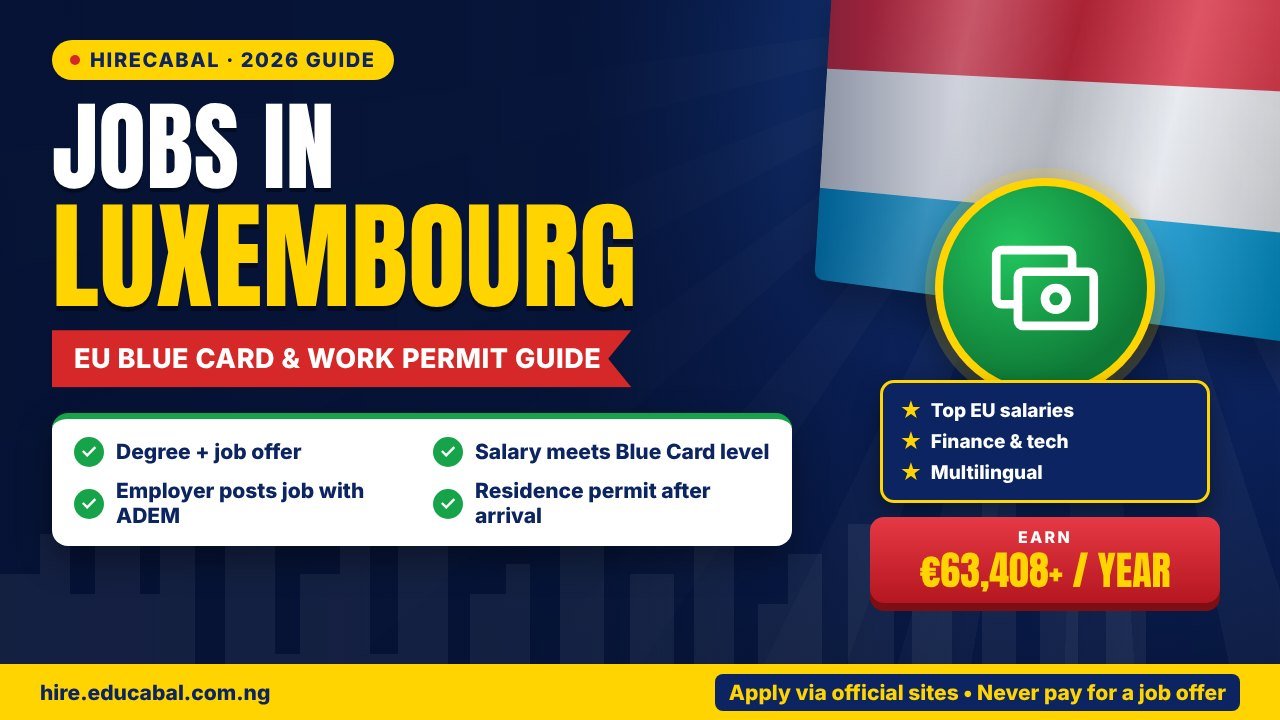
Luxembourg is small but wealthy. It is home to EU institutions, global banks, fund administrators and tech companies, and its salaries are among the highest in Europe. Non-EU professionals usually come on the EU Blue Card or a salaried worker residence permit.
EU Blue Card
- Minimum gross salary of €63,408 a year, applicable since March 2025. A lower threshold applies to certain shortage occupations, so check Guichet.lu.
- A higher-education qualification and a job contract of at least six months.
- Leads to long-term residence and easier EU mobility.
Salaried worker permit
For jobs that don’t meet Blue Card criteria, employers must usually declare the vacancy to ADEM (the national employment agency) and show that no suitable EU candidate was found before you can get a residence permit as a salaried worker.
Read also: Healthcare Assistant and Care Jobs in Ireland: General Employment Permit 2026
In-demand sectors
Fund administration and banking, IT and cybersecurity, compliance and risk, healthcare and engineering.
Languages
Luxembourg is multilingual (Luxembourgish, French and German). English is widely used in finance and tech, but French opens many more doors.
Good to know
Housing is expensive, and many workers live across the border in France, Belgium or Germany. Factor this into your budget, and check whether a cross-border arrangement works for your residence status before relying on it.

Frequently asked questions
Do I need to speak French?
Not always in finance and tech, but French or German greatly increases your options.
How long does the process take?
Several weeks to a few months, including the approval and visa steps.
Can my spouse work?
Family members of Blue Card holders generally have access to the labour market.
Information checked in October 2026. Immigration rules change often, so always confirm the latest requirements on the official government website before applying or paying any fees.